
Sell Now or Age in Place? A Kind, Honest Guide
Your home isn’t just a house. It’s where you raised your kids, hosted the holidays, and learned which stair creaks in the dark. So when you start asking whether to sell now or age in place, it doesn’t feel like a real estate question. It feels personal, because it is.
If that question is on your mind, or you’re talking it over with the people you love, take a breath. There’s no wrong answer here, and there’s no rush. This guide is here to help you see both paths clearly. It’s not here to talk you into a For Sale sign.

There’s No Right Answer, Only the Right One for You
It’s easy to feel pushed. A neighbor downsizes and swears it changed their life. Your daughter worries about the stairs. A headline says the market’s about to turn. That noise can make a personal decision feel like a test you might fail.
It isn’t. Plenty of thoughtful people age in place, and plenty sell. The point isn’t to pick the “smart” move. It’s to find the one that keeps you safe, comfortable, and at home for years to come. Everything below is just here to help you see the whole picture.
What Aging in Place Really Means
Aging in place means staying in your current home as you get older, usually with a few updates that keep it safe and easy to live in. For a lot of people, it’s the obvious choice. The house is familiar, the memories are close, and staying independent in a place you love counts for a lot.
Why staying can be the right call
- You’re close with your home, your neighbors, and your community.
- The layout already works, or one small change would fix it, like a first-floor bedroom or better lighting.
- Moving feels like a lot right now, and nothing’s forcing your hand.
- You’ve got support nearby, whether that’s family, friends, or hired help.
What staying can quietly cost
Staying works great when the house fits your life. It’s worth being honest about what it can ask of you over time.
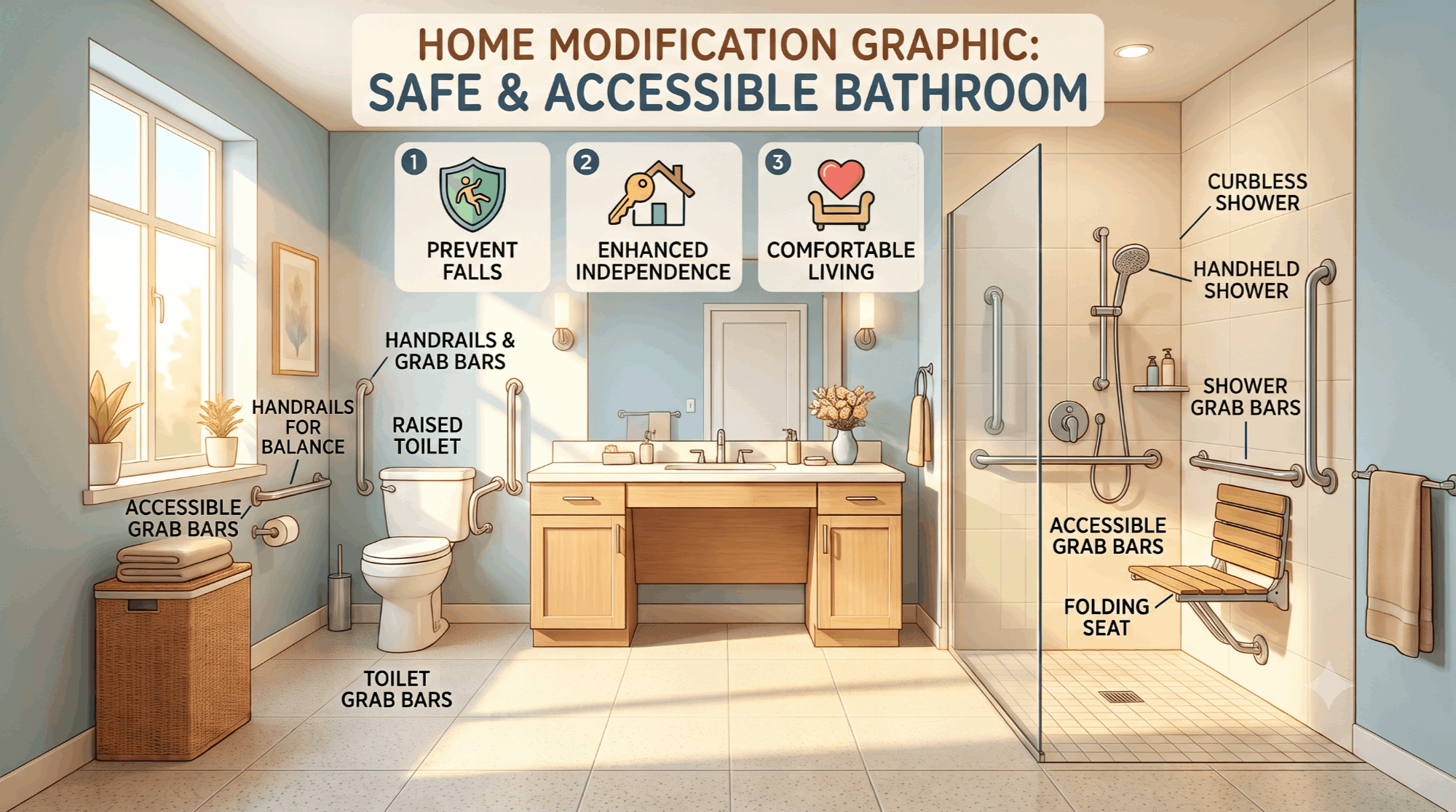
- Modifications add up. Grab bars, ramps, a walk-in shower, or a stair lift can run anywhere from a few hundred dollars to several thousand.
- Upkeep doesn’t stop. Yard work, repairs, and cleaning get harder to do yourself and pricier to hand off.
- It can get lonely. If friends move away or driving wears you out, a big house gets quiet fast.
None of that means staying is wrong. It means aging in place works best as a plan, not a default. A good contractor and an occupational therapist can tell you what your home would need to support you long term. AARP’s aging-in-place checklist is a solid place to start.
When Selling Might Be the Kinder Choice
Sometimes the kindest thing you can do for the person you’ll be in ten years is make a move now, while it’s your call. Selling isn’t giving up your independence. For a lot of people, it protects it.
Signs it’s worth a look
- The house has more space, stairs, or maintenance than you actually use.
- Most of your money is locked up in the home, and freeing some would take the pressure off.
- You’d love to be closer to family, doctors, or a walkable area.
- The upkeep feels like a chore instead of a joy.
- You want to choose your next chapter yourself, not have an emergency choose it for you.
Where people go next
Selling doesn’t mean a nursing home you’re not ready for. Most sellers move to a single-level house, an easy-to-manage condo or townhome, a 55+ community, or a smaller place near the people they love. The right next home is the one that gives you less to worry about and more room to enjoy.
The market can work in your favor too. If you’ve owned for decades, you’re probably sitting on real equity, and knowing your home’s value is a smart first step even if you don’t sell for years. National numbers from the National Association of Realtors give you the big picture, but a local read on Gig Harbor will always tell you more.
Questions to Sit With (No Pressure, No Timeline)
When you’re ready, these bring some quiet clarity. There are no right answers, just honest ones.
- Where do I see myself happiest and safest in five years?
- What does this house ask of me every week, and how do I feel about it?
- If I stay, what has to change to keep it comfortable and safe?
- If I sell, what would my next home make easier?
- Who do I want next to me for this, and have I asked them in?
Write the answers down, or talk them through over coffee with someone you trust. There’s no prize for rushing.
You Don’t Have to Do This Alone
Whichever way you’re leaning, you deserve straight answers without a sales pitch. Sometimes just knowing your options helps: what the house is worth, what a move might look like, what staying would take. Then the choice feels less like a leap and more like a step you’re ready for.
If it’d help to talk it through, we’re happy to listen. You can also read our downsizing checklist and our guide to preparing your home for sale whenever you’re curious.
Frequently Asked Questions
Is it better to age in place or sell my home?
Neither wins across the board. The right call depends on your health, your finances, the layout of your home, and how much help you have nearby. Aging in place fits people whose home already works or could work with a few affordable changes. Selling makes more sense when the upkeep, stairs, or costs start to outweigh the comfort of staying.
How do I know when it’s time to sell my home as I get older?
Watch for a few signs: maintenance starts feeling like a burden, the stairs or layout get hard to manage, you want to be closer to family or care, or most of your savings is tied up in the house. There’s no single trigger. But deciding on your own terms, before an emergency forces it, almost always makes for an easier move.
Is aging in place cheaper than downsizing?
Sometimes, but not always. Staying skips moving costs and keeps you in a familiar place. But safety updates like walk-in showers, ramps, or stair lifts, plus ongoing upkeep and any in-home care, add up over the years. Compare the real long-term cost of both, not just the price tag today, and you’ll see the picture clearly.
What are the downsides of aging in place?
The main trade-offs are the cost of home modifications, the ongoing work and expense of upkeep, and the risk of getting isolated if driving or friendships get harder. It works best as a real plan with the right updates and support, not something you land on by not deciding.
Where do people move after selling a longtime family home?
Most pick a single-level home, a low-maintenance condo or townhome, a 55+ community, or a smaller place closer to family and services. For most folks the goal is simple: less upkeep, more freedom. It rarely means jumping straight to assisted living.
Should I get my home valued even if I’m not ready to sell?
Yes. Knowing what your home is worth today helps you weigh your options and plan your money, even years ahead of a move. A local valuation reads your Gig Harbor neighborhood far better than national averages, and with Sievers Real Estate it comes with no pressure and no obligation.
Where can I get information on what to expect when selling a home I've lived in for decades?
Read our blog on Selling a home you've owned for decades
The Bottom Line
Choosing whether to sell now or age in place is one of the most human calls a homeowner ever makes. Both roads can lead to comfort, dignity, and a good life. What matters is that the choice is yours, made with clear eyes and a level head. Wherever you land, you don’t have to figure it out alone.
Ready when you are. Reach out to Sievers Real Estate for a straight, no-pressure conversation or a free home valuation. Stay or sell, we’ll help you feel good about your next chapter.
Recent Posts





GET MORE INFORMATION