
Selling a Home You've Owned for Decades: What to Expect
You bought this house when the mortgage rate had a different first digit and half the neighborhood was still farmland. Selling a home you've owned for decades is nothing like selling one you picked up five years ago. The equity is bigger, the paperwork runs longer, and the house has forty years of life in it that a five year old build simply doesn't.
You Have More Equity Than You Think, and More Costs Too
If you bought in the 1980s or 1990s, your home has likely multiplied in value several times over. Your mortgage is probably paid off or close to it. That's the good news, and it's usually better news than people expect.
The part that surprises sellers is the gap between sale price and what actually lands in your account. Plan on these coming off the top:
- Compensation to your listing firm, plus any compensation you choose to offer the buyer's broker's firm
- Title work, escrow fees, and recording costs
- Prorated property taxes and any unpaid assessments
- Repairs negotiated after the inspection
- Moving costs, storage, and cleanout, which run higher than anyone budgets
Ask your broker for a net sheet before you list, not after you get an offer. It's a one page estimate of what you walk away with. Every seller should see one early.
The Capital Gains Question
This is the single biggest thing longtime owners overlook, and it's worth a conversation with your CPA before you list.
Under current federal rules, a single filer can exclude up to $250,000 of profit on a primary residence and a married couple filing jointly can exclude up to $500,000, as long as you lived in the home at least two of the last five years. For a home bought decades ago, that exclusion sometimes isn't enough to cover the whole gain. The IRS lays out the details in Publication 523.
Your taxable gain is based on your cost basis, not your purchase price. Basis is what you paid plus every capital improvement you've made over the years. The addition, the new roof, the finished basement, the deck, the HVAC system, the replacement windows. Forty years of improvements can add up to real money and lower your tax bill accordingly.
Go dig through the files. Old permits, contractor invoices, and canceled checks are worth hunting down. If you inherited the home or a spouse has passed, ask specifically about a step up in basis, which can wipe out most of the gain entirely.
The Market Doesn't Work the Way It Did When You Bought
When you bought, a buyer found your house in the newspaper or because their broker had a key. Today the listing goes live everywhere at once and buyers decide in about eight seconds on a phone screen.
A few things that follow from that:
- Photos are the showing. A house that photographs poorly gets skipped before anyone sets foot in it.
- The first week matters most. That's when your listing is new to every buyer with a saved search, and it's when you get your best offers.
- Price is set by what sold in the last ninety days, not what your neighbor got in 2021 and not what you need to fund the next chapter.
- Buyers come pre-approved and move fast, or they're not really buyers yet.
The National Association of Realtors tracks this every year, and the pattern holds: buyers start online, and the homes that show well online sell faster and for more.
What Buyers Notice in a Home That's Been Loved for Forty Years
You've stopped seeing the things you live with every day. Buyers see all of them in the first ten minutes.
Systems Age Whether You Notice or Not
The inspector will find these, so you may as well know first:
- Roof age and any soft spots or curling shingles
- Furnace, AC, and water heater, all of which have expected lifespans buyers know
- Electrical panel, especially fuse boxes, older brands with known issues, and any knob and tube or aluminum wiring
- Galvanized or polybutylene supply lines
- Original windows and failed seals
- Grading, gutters, and any sign of water in the basement
- Septic and well, if you're on either
A pre-listing inspection costs a few hundred dollars and hands you the negotiating advantage. You find out what's coming, you fix what's cheap, and you price the rest in. Nothing kills a deal faster than a buyer discovering a problem you didn't know about.
What's Worth Fixing and What Isn't
Worth every dollar: paint in neutral colors, clean or replaced carpet, a deep professional clean, decluttering, trimmed landscaping, working light fixtures and updated bulbs, and any active leak or safety issue.
Usually not worth it: a full kitchen remodel right before selling, high-end finishes that won't come back to you, replacing a furnace that still works fine, or gutting a dated but functional bathroom.
Buyers pay for condition and cleanliness. They do not pay a premium for someone else's brand new tile choice. A house that's dated but spotless and well maintained beats a house with one shiny room and deferred maintenance everywhere else.
The Paperwork Got Longer
Decades of ownership means decades of records, and some of them need cleaning up before closing.
- Seller disclosures are far more detailed than they were in 1985, and you'll be asked about repairs and issues going back years
- Homes built before 1978 require a lead-based paint disclosure
- Unpermitted work from the 1990s can surface during the sale and needs a plan
- Title can carry old liens, a deceased spouse still on the deed, a maiden name, or an easement nobody remembers agreeing to
- Homes held in a trust or moving through an estate have extra steps and extra signatures
Get title started early. A title issue found in week one is a phone call. The same issue found three days before closing is a delayed closing and a nervous buyer.
Forty Years of Belongings

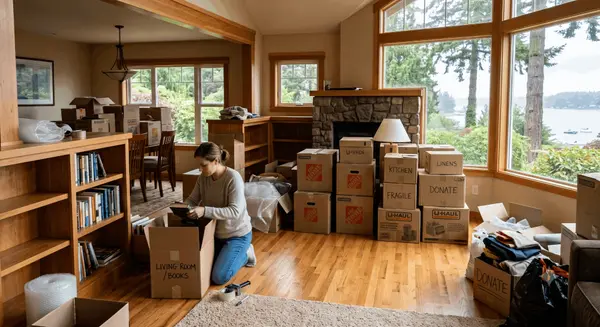
This is the part that takes the longest, and almost nobody plans enough time for it. Cabinets, closets, the attic, the garage, the crawlspace, the shed. Decades of stuff accumulates quietly.
What works:
- Start sixty to ninety days before you want photos taken, not two weeks before
- Work one room at a time and finish it completely before moving on
- Call the family early and let them claim what they want, with a deadline
- Bring in an estate sale company for anything with resale value
- Book a donation pickup and a junk haul the same week so nothing sits in the garage
Empty and clean shows better than full and tidy. Every box you remove makes the house look bigger, and buyers looking at a decluttered home are picturing their own life in it instead of watching yours.
The Part Nobody Puts on a Checklist
You raised kids here. You marked heights on a doorframe. You know which stair creaks. Then a stranger walks through and calls your kitchen dated.
That stings, and it's normal. Two things help. First, separate the house from the home. The buyer is pricing drywall and a roof, not your memories, and there's no offer number that reflects what the place meant to you. Second, give yourself more time than the logistics require. Sellers who rush this decision are the ones who regret it.
If you're still deciding whether selling is even the right move, start with Sell Now or Age in Place. That one walks through the tradeoffs before you get to the how.
A Realistic Timeline for Selling a Longtime Home
From decision to keys handed over, plan on three to five months. Here's how that usually breaks down:
- Twelve weeks out: walkthrough with your broker, call your CPA, order a pre-listing inspection, and open title
- Eight to ten weeks out: declutter and clear out, room by room
- Four to six weeks out: complete repairs and any painting or flooring work
- Two weeks out: deep clean, stage, and shoot photos
- Listing week: go live, host showings, and review offers
- Under contract: thirty to forty-five days to inspection, appraisal, and closing
Homes with a lot of accumulated belongings or a title cleanup run longer. Homes that are already clear can move much faster. Your broker should give you a timeline built around your house, not a generic one.
Where to Start
You don't have to decide anything today. The first step is just knowing what your home is worth right now and what it would take to get it ready.
At Sievers Real Estate, we do a lot of these sales, and we know what a home built decades ago needs before it hits the market. We'll walk the house with you, tell you honestly what's worth doing and what isn't, and give you a real number and a real timeline. No pressure, no obligation. Start with a free home valuation, or call us and we'll come take a look.
You've owned this house a long time. It's worth selling it right.
Recent Posts






GET MORE INFORMATION