
What to Expect at a Listing Appointment When Selling Your Pierce or Kitsap County Home

If you've never sold a home, or the last time you did was 15 years ago, that first meeting with a listing broker can feel a little mysterious. What are they going to look at? Will they judge the dishes in the sink? Are you signing your life away before they leave?
Here's the good news. A listing appointment is mostly a conversation. It's a chance for you and a broker to get to know each other, walk through your home, and talk honestly about price, timing, and what you want out of the sale. Here's what typically happens, step by step, when you're selling a home in Pierce or Kitsap County.
First, Find a Listing Broker to Interview
Before there's a listing appointment, there's the question of who to call. If you haven't sold in a while, you may not know a single broker by name, and that's completely normal.
Here's where most sellers start:
- Ask people who sold recently. Friends, family, coworkers, and neighbors who've been through it in the last few years can tell you who communicated well, who priced it right, and who they'd hire again.
- Search online. Look at a broker's website, reviews, and recent sales. A broker who's sold homes in your neighborhood already knows what buyers there are looking for.
- Ask in local Facebook groups. Community groups for places like Gig Harbor, Port Orchard, or Bonney Lake are full of people happy to share who they used. Pay attention to names that come up again and again.
- Notice who's active nearby. Yard signs, open houses, and "just sold" postcards in your area show you who's actually working your market.
It's smart to talk with more than one broker. You're hiring someone to handle one of the biggest financial moves you'll make, so it's worth finding the right fit in experience, communication style, and personality.
Reaching Out: It Starts With a Call or an Email
Once you have a name or two, most listing appointments begin with a simple message: "We're thinking about selling." You don't need to have it all figured out. Plenty of homeowners reach out a year or more before they plan to move.
Typically the listing broker will ask a few quick questions right away:
- The property address. This lets the broker start pulling sales data for your area.
- Upgrades since you bought. A new roof, a remodeled kitchen, or updated windows can change your home's value, so it helps to know about them early.
- How did you hear about them. This lets the broker know who to thank for referring them or what marketing brought them to your attention.
From there, the broker sets up a time to come out to the house. Plan on the appointment lasting about an hour.
Who Should Be at the Appointment?
Everyone who has a say in the decision. That might be both spouses, co-owners, or an adult child helping a parent downsize. When all the decision makers hear the same information at the same time, nobody's left playing telephone later, and questions get answered on the spot.
The Walkthrough: You're the Tour Guide
After a quick hello and removing their shoes, the listing broker will usually ask you to walk them through the home. You lead, they follow and take notes.
They're paying attention to details buyers and appraisers care about, like flooring types, layout of the rooms, and overall condition. Just as important is what you tell them along the way.
As you go room by room, mention things like:
- The age of the roof, furnace, water heater, and other big systems
- Repairs you've made, and roughly when
- Upgrades and remodels, even small ones like new fixtures or paint
- Known issues, such as a slow drain or a window seal that's failing
- Regular maintenance, like gutter cleaning or a serviced septic system
Don't stress about cleaning first. The broker isn't grading your housekeeping. They're looking at the bones of the house and how it'll compete with other homes for sale.
Don't hide problems either. Washington sellers of most residential homes fill out a seller disclosure statement, often called Form 17, as required under RCW 64.06. The sooner your broker knows about an issue, the sooner they can help you decide whether to fix it, price for it, or disclose it plainly.
The Kitchen Table Conversation
Once the walkthrough wraps up, everyone usually settles in at the kitchen table. This is the most important part of the whole appointment.
Typically the listing broker will ask two big questions:
- Why are you thinking about selling? Maybe it's a military transfer out of JBLM, a growing family, a job change, or the kids have moved out, or perhaps it is due to divorce or someone has passed away.
- Is there a timeline that matters? A closing date tied to a new job, a school year, or the purchase of your next home changes the whole strategy.
A good broker really listens here. Your motivation and priorities shape everything that comes next. Some sellers want top dollar and have time to wait. Others need a quick, smooth sale. Some need to line up the sale with buying their next place. There's no wrong answer, but the plan looks different for each one.
Understanding the Comparative Market Analysis (CMA)
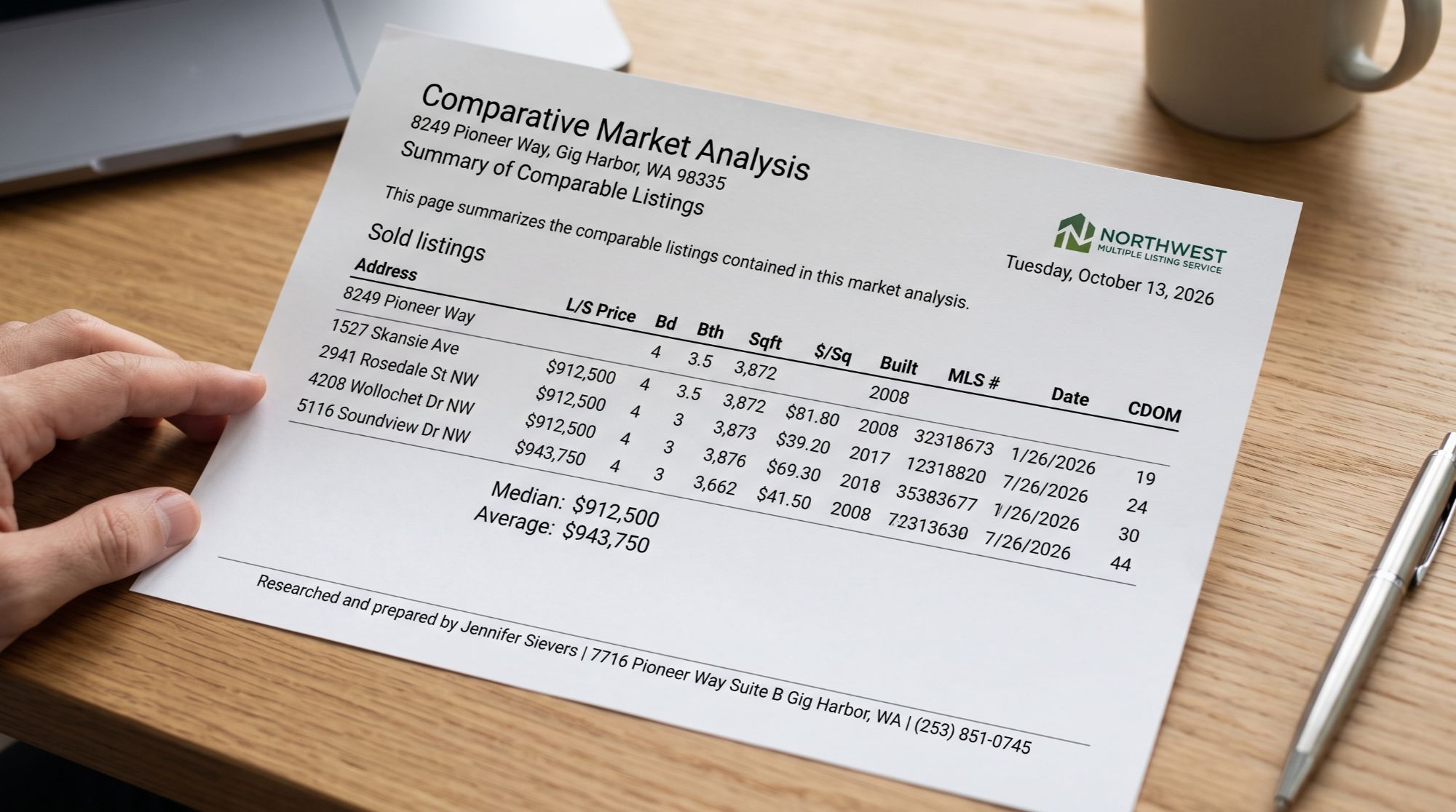
For most homes, the broker shows up having already prepared a comparative market analysis, or CMA. It's a report that looks at two things:
- Recent sales. Homes similar to yours that have sold nearby. These show what buyers have actually been willing to pay.
- Current active listings. A snapshot of the homes you'd be competing against right now.
Combined with what the broker learned on the walkthrough and at the table, the CMA helps guide you to a list price that fits your goals and your timeline. It's not an appraisal, and it's not a number pulled out of thin air. It's a reasoned starting point based on real local data. If your home is unique or you have owned it for a very long time, the broker may want to do the walkthrough first before creating the CMA.
Pricing is where a lot of first-time sellers get tripped up. A price that's too high can leave a home sitting while buyers pass it by. A price that's well supported tends to draw stronger interest early, which is when you have the most leverage. For a wider view of trends, the National Association of REALTORS research page is a solid outside resource.
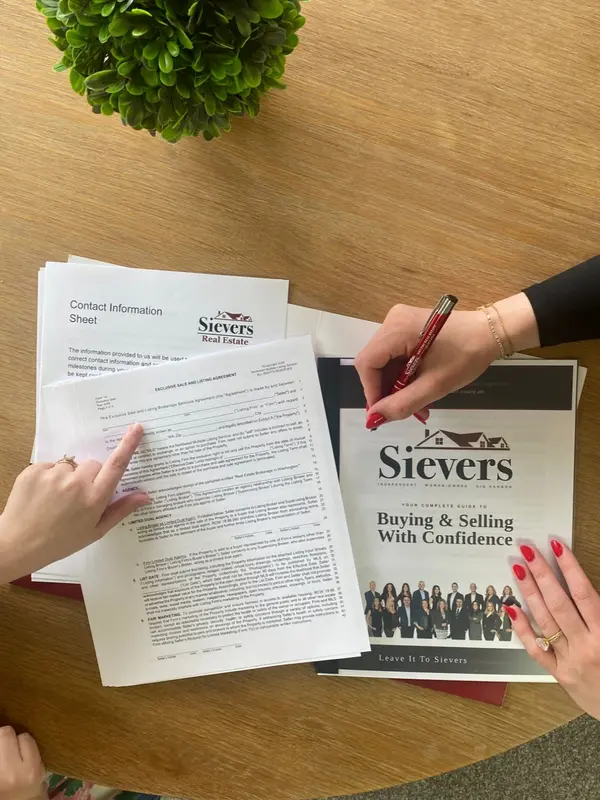
The Listing Folder: Contract Documents and a Client Guide
Typically the listing broker brings a folder with a few things like:
- The listing agreement documents. This is the contract between you and the brokerage. It covers the list price, how long the listing lasts, and how the broker is paid.
- A client guide. A plain-language resource that explains the selling process, and the buying process too, since most sellers are also buying their next home.
Washington law also requires brokers to give you a pamphlet on the law of real estate agency before you sign an agency agreement. It explains who the broker works for and what duties they owe you. You can read the details in RCW 18.86.
You Don't Have to Sign That Day
This surprises a lot of people. A good listing broker usually doesn't push you to sign at the kitchen table.
Instead, you'll typically get time to talk it over as a family, sleep on it, and come back with questions. Selling a home is a big decision, and you should feel sure about it.
Once you're ready, the documents can be sent to you to sign electronically. If you'd rather sign in person, the broker can meet up with you again. Either way works.
The Runway Before Your Home Hits the Market
In Washington, a listing agreement can be signed up to 90 days before the home goes active on the market. That window is a big advantage, especially if you're not in a rush.
Here's how that time usually gets used:
- You prepare the home. Decluttering, small repairs, touch-up paint, yard cleanup, and packing up what you won't need.
- The broker lines up staging. Even light staging can help buyers picture themselves living there.
- Professional photos get scheduled. Most buyers see your home online first, so photos matter.
- Marketing materials come together. Listing descriptions, flyers, and online promotion are ready before launch day.
By the time your home goes live, everything is in place to make a strong first impression. Want a head start? Check out How to Get Your Home Ready to List.
How to Prepare for Your Listing Appointment
You don't need to bring much, but a little prep makes the meeting more productive.
Helpful Things to Have on Hand
- A list of upgrades and repairs, with approximate dates and costs
- Your rough mortgage balance, so you can talk about what you might walk away with
- HOA information, if you have one
- Any warranties, permits, or inspection reports you've kept
Good Questions to Ask the Listing Broker
- How did you arrive at this price range?
- What would you do first to get my home ready?
- How will my home be marketed?
- How will you keep me updated once we're live?
- What happens if we don't get offers right away?
Listing Appointment FAQs
How long does a listing appointment take?
A listing appointment usually lasts about an hour. That covers the walkthrough, a conversation about your goals and timeline, a look at pricing, and a review of the listing documents. This is also an opportunity for you to ask questions so don't worry about the clock.
Do I have to sign a listing agreement at the first meeting?
No. Typically the listing broker leaves the documents with you so you can talk it over. When you're ready, you can sign electronically or meet the broker again to sign in person.
What is a CMA in real estate?
A CMA, or comparative market analysis, compares your home to similar homes that recently sold nearby and to current active listings. Brokers use it to recommend a list price. It's not the same as an appraisal.
How early can I sign a listing agreement in Washington?
In Washington, a listing agreement can be signed up to 90 days before your home goes active on the market. That gives you time to prepare the home and gives the broker time to arrange staging, photos, and marketing.
Should I clean my house before a listing appointment?
A quick tidy is plenty. The broker is looking at your home's layout, condition, and features, not your housekeeping. Save the deep clean for before photos.
Who should attend the listing appointment?
Everyone who has a say in the decision to sell, such as spouses, co-owners, or family members helping a parent. That way everyone hears the same information and can ask questions on the spot.
Ready for Your Listing Appointment?
A listing appointment isn't a sales pitch you have to survive. It's a walkthrough, an honest conversation about why you're moving, a look at real market data, and a plan built around your goals. And you get time to think before signing anything.
If you're thinking about selling in Pierce or Kitsap County, Sievers Real Estate would love to sit down at your kitchen table and talk it through, with no pressure and no obligation. Ask how much your home is worth or contact us to set up your listing appointment today.
Recent Posts





GET MORE INFORMATION